Proposed Chanthaburi reservoir stirs dispute over water needs, forests, wildlife and villagers
The Khlong Wang Tanot reservoir would hold 99.5 million cubic metres and could swallow thousands of hectares of forest, habitat and village land, CNA reports.
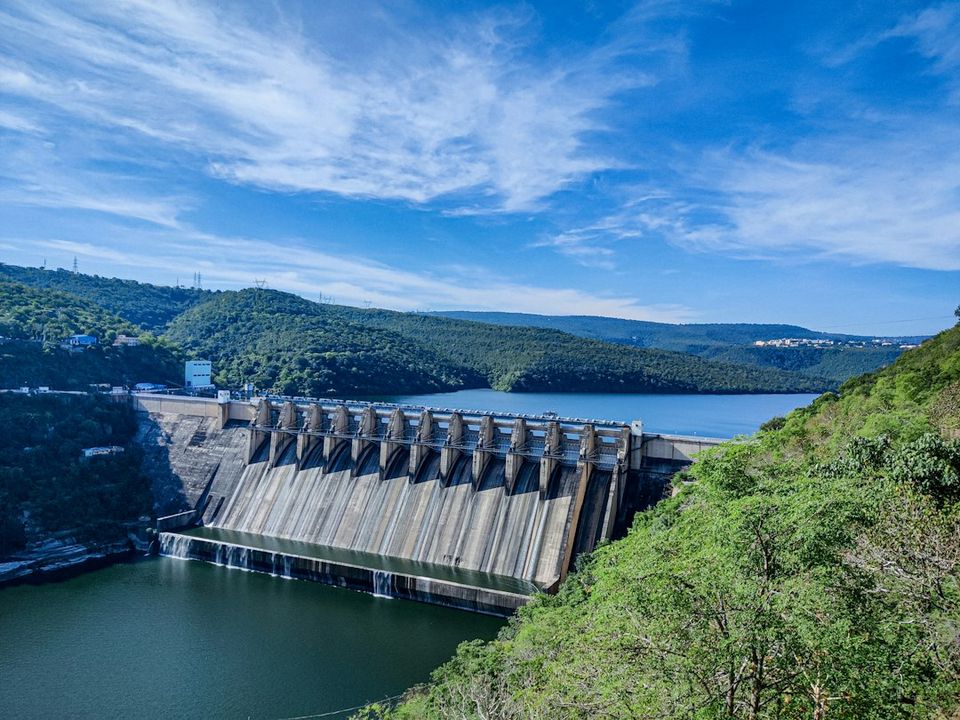
A proposed reservoir in Chanthaburi province, in eastern Thailand, has become a point of dispute between the country's need for water and its duty to protect forests, wildlife and villagers, according to CNA.
The Khlong Wang Tanot reservoir would hold 99.5 million cubic metres of water. It could swallow thousands of hectares of forest, wildlife habitat and land occupied by rural communities. Thailand's Cabinet approved the project in August, with construction planned over seven years. It cannot go ahead without permission to use the protected forest in Khao Sip Ha Chan, including approval from the National Park Committee. The government has said newer environmental evidence can still be considered before that process is completed.
Industry demand is climbing in the east
The Royal Irrigation Department (RID) began studying the Wang Tanot watershed in the 1990s after serious dry-season shortages. Durian orchards are spreading across land once mostly planted with rubber, and they need far more water. Three reservoirs already exist in the watershed, and Wang Tanot would be the fourth and largest.
Data centres have now arrived in the Eastern Economic Corridor (EEC). Three major facilities are operating or expanding, and nine more are under construction, according to industry tracking data. Government figures show 29 data-centre projects have applied for investment incentives in the EEC, more than half of all such applications nationwide. WHA Utilities and Power said this year that data centres can require 12 to 16 times as much water as conventional business customers.
Thailand's Office of National Water Resources expects industry water demand in the EEC to grow by 58 per cent between 2024 and 2037. The World Bank warns the region could face a water-supply shortfall of almost 40 per cent under average conditions, rising to 72 per cent in dry years, even with planned infrastructure investments.
RID's Thammanoon Innooch, director of the Large-Scale Irrigation Construction Office in the province, acknowledged that up to 70 million cubic metres of surplus rainy-season runoff could eventually be sent each year towards Rayong province to support the wider EEC. He said local needs would be met first, and that the volume would depend on rainfall and other conditions.
Villagers want to benefit first
Seeda Saengkla, head of Ban Klong Yang village, lives inside the proposed reservoir area. Her community has 334 households and 654 residents. Many are prepared to accept the project but fear losing homes and livelihoods without enough compensation, she said.
Pornpimol Thongbo, a durian farmer in Kaeng Hang Maeo district, questioned the need for another reservoir when many local farmers still cannot get water from those already built. She said: "But can local people benefit first? That's what matters to me."
Somnuck Jongmeewasin, research director at civil society organisation EEC Watch, said greater industrial water recycling, more efficient irrigation and improved distribution could ease pressure on resources. "All data centres have money. They can buy electricity. They can buy water. But local people cannot buy," he said.
The Department of National Parks, Wildlife and Plant Conservation (DNP) has advocated a much smaller version that would flood only about 112 hectares of national park, along with smaller reservoirs, more storage at existing dams and better water management. Thammanoon said such measures could help but would not supply enough water to meet projected demand. The EEC Office is working with the World Bank on expanding wastewater reuse.
More than 100 elephants use the area
The national park and its surroundings form part of an important wildlife corridor, used by more than 100 elephants searching for food and water. In drier periods the elephants travel farther and increasingly enter agricultural areas to feed, said Supakarn Kaewchot, a senior veterinarian for the DNP.
Rattanawat Chaiyarat, an associate professor at Mahidol University, said there is concern that flooding feeding grounds and movement corridors could potentially bring elephants into closer contact with people. He said human-elephant conflict in the eastern region was "already quite severe".
RID acknowledged that habitat loss could raise the risk of elephants moving into farmland and communities. Thammanoon said the reservoir is necessary for long-term water demand and that RID has built in measures to monitor wildlife movements and maintain habitat connectivity.
Silchai Sae Jia, a 73-year-old rubber farmer, said elephants regularly cross his plantation, pulling down trees and frightening workers. His land would stay above the waterline, but he fears losing the surrounding habitat could make his property uninhabitable. "Your development should not come at the expense of people like me," he said.