Indonesia cuts gas sent to Singapore, analysts say move shows its own rising need
31 million standard cubic feet a day diverted for domestic power. EMA says the cut is under 2 per cent of Singapore's daily demand.
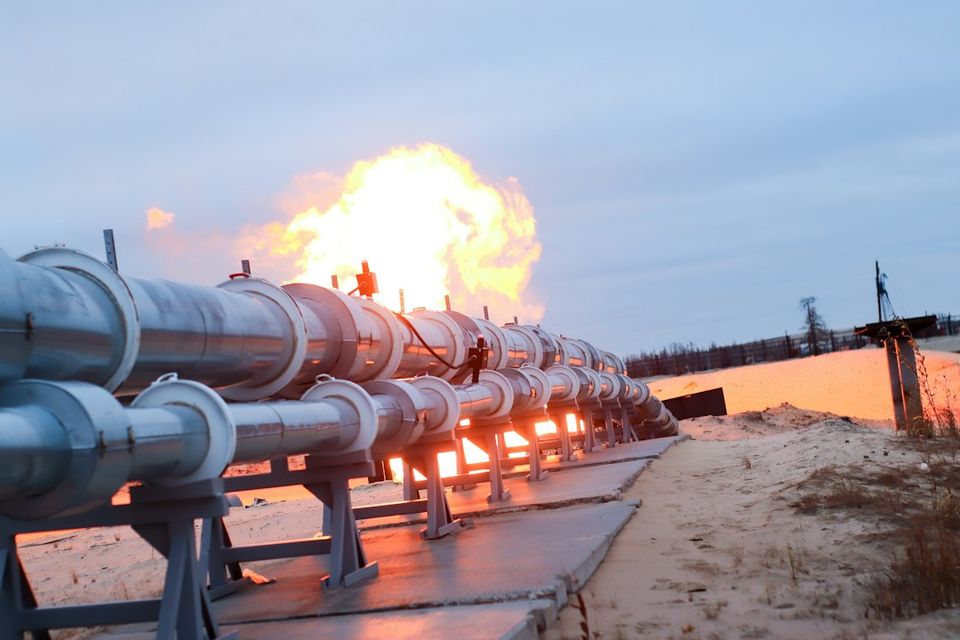
Indonesia has started sending less natural gas to Singapore, and analysts say the move shines a light on how much gas Indonesia itself now needs. CNA reported that the cutback started on Saturday (Oct 24), when Indonesia redirected 31 million standard cubic feet daily, taken from Natuna and Sumatra, towards its own power needs.
Limited effect expected in Singapore
Singapore's Energy Market Authority (EMA) said the reduction represents under 2 per cent of what the country consumes each day, and that sufficient supplies and contingency plans are in place to cope with such disruptions. About 95 per cent of Singapore's electricity is generated from natural gas, which comes by pipeline from Indonesia and Malaysia and also in shipments of LNG sent by suppliers overseas.
On Sunday (Oct 25), energy minister Tan See Leng said electricity prices are unlikely to be greatly affected in the short term, because a large share of Singapore's gas carries prices tied to international benchmarks. The four analysts who spoke to CNA all said that neither Singapore's energy security nor its electricity prices were likely to be materially affected by the cut.
At the People's Action Party convention, Prime Minister Lawrence Wong said all parties are expected by Singapore to honour their commercial agreements for gas supply, and that the country's gas importer will take the steps needed to protect its rights and interests under the contracts. Mr Wong added that investment in LNG terminals has readied Singapore for such risks, since gas can be brought in from a range of countries and the country need not depend solely on pipelines.
Why Indonesia wants more gas at home
Indonesia's upstream regulator SKK Migas said the step is meant to protect domestic gas for power generation. Roger Fouquet of the Energy Studies Institute (ESI) said the economy has grown at about 5 per cent a year for several years, with electricity demand rising by a broadly similar amount. Data centre growth could push future needs far above what was expected when the supply contracts with Singapore were drawn up.
SKK Migas vice-president of commercial Rayendra Sidik, speaking in Singapore on Monday, said Indonesia faces the challenge of balancing growing domestic gas demand, notably from the fertiliser sector. He said hyperscalers, which need firm, round-the-clock supply, are adding to demand and will require careful planning. He declined to comment on the export cuts, referring questions to the ministerial office in Indonesia.
Trade-offs and limits
Alvin Chew of the S Rajaratnam School of International Studies (RSIS) said Indonesia stands to gain more economically by exporting gas to Singapore at higher prices than by keeping it for domestic use. In his view, Jakarta may be scaling back exports as a way of helping non-oil and gas sectors grow more strongly. He also said Indonesia's reputation as a major gas supplier could suffer if exports were cut immediately while contracts remain in force, rather than on a clearly communicated future timeline.
Prateek Pandey of Rystad Energy said redirecting more gas to domestic use would need infrastructure investment, and producers would need commercially viable prices to keep producing. Beyond a certain point, he said, export cuts could force producers to lower output instead of simply sending gas to another buyer.
Looking further ahead
Singapore, which has been diversifying its gas supply, should find the latest cuts "manageable", Mr Pandey said, unless reductions deepen or production at fields is disrupted. In his view, the more serious test may arrive after 2028, once existing gas export contracts begin to expire.
ESI's David Broadstock said it should be "relatively easy" to find other supplies on the international gas market, and Dr Fouquet pointed to LNG from Australia and the United States. Dr Broadstock cautioned that Singapore may have to take a close look at its energy dependencies, low-carbon electricity imports among them, should countries across the region increasingly prioritise their own needs. He said Singapore and Indonesia could use the moment to renew talks on balancing their energy security needs, while strengthening energy cooperation across ASEAN.
According to Dr Chew, Singapore would gain more energy independence by developing its own solar or nuclear power capacity.